

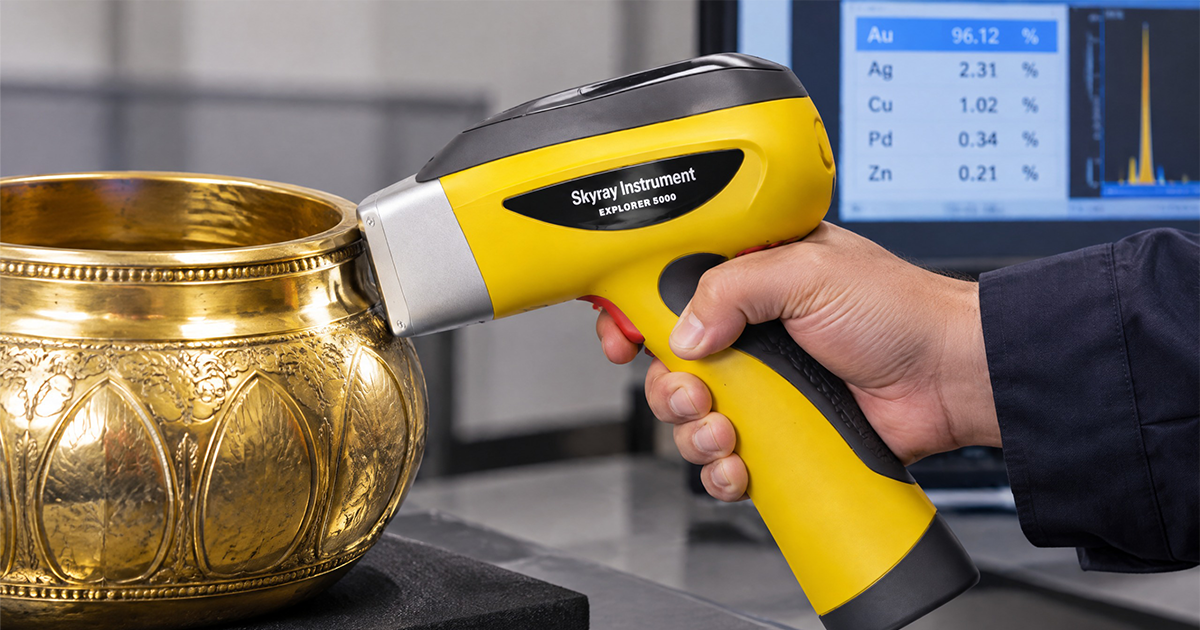
Handheld element analyzers have become valuable tools across industries that require fast, reliable, and convenient material identification. From metal fabrication and scrap recycling to precious metal testing, mining, and electronics manufacturing, these portable devices help professionals determine the elemental composition of materials without relying entirely on laboratory testing.
Traditional material analysis methods may involve sample preparation, transportation, and longer processing times. Handheld analyzers offer a practical alternative by allowing operators to perform measurements directly at the inspection site. This capability helps businesses improve quality control, identify material inconsistencies, reduce processing delays, and make informed decisions.
The Explorer 5000 is a handheld X-ray fluorescence (XRF) analyzer designed for elemental analysis applications. By using XRF technology, handheld analyzers can identify and measure elements in suitable samples, depending on the device configuration, calibration, and testing conditions.
Understanding the applications and advantages of handheld element analyzers can help businesses determine how these instruments fit into their inspection, testing, and quality assurance processes.
What Is a Handheld Element Analyzer?
A handheld element analyzer is a portable instrument used to identify the elemental composition of materials. Many handheld analyzers use X-ray fluorescence technology, commonly known as XRF, to analyze metals, alloys, minerals, and other suitable materials.
In XRF analysis, the instrument directs X-rays towards a sample. The interaction causes elements in the sample to emit characteristic fluorescent X-rays. The analyzer detects these signals and uses them to identify the elements present and, where supported, estimate their concentrations.
This technology makes handheld XRF analyzers useful for applications where material identification and rapid elemental screening are important.
Unlike many conventional laboratory techniques, handheld XRF analysis can often be performed directly on a suitable sample with minimal preparation. However, results depend on factors such as the material’s surface condition, sample geometry, element concentration, and instrument calibration.
Applications of Handheld Element Analyzers
Handheld element analyzers support a wide range of industrial and commercial activities. Their portability and ability to provide rapid results make them particularly useful in environments where materials need to be inspected frequently.
1. On-Site Material Verification
Material verification is essential in metal fabrication, manufacturing, construction, and engineering industries. Using the wrong alloy or material grade can affect product quality, mechanical performance, and long-term reliability.
Handheld element analyzers allow operators to check the composition of incoming raw materials, metal components, pipes, and finished products at the point of inspection.
For example, a quality control team can use an analyzer to distinguish between suitable alloy grades before materials enter the production process. This helps identify potential material mix-ups and reduces the risk of using an incorrect grade.
On-site material verification can also support positive material identification (PMI) programs in industries where material traceability and compliance with technical specifications are important.
2. Precious Metals Analysis
Gold testing and precious metal verification are important in jewellery manufacturing, jewellery retail, pawnshops, and precious metal trading. Businesses need reliable ways to assess the composition of jewellery and other valuable metal items.
Handheld XRF analyzers can help identify the elements present in gold, silver, platinum, and other suitable precious metal alloys. They can also estimate the composition of tested materials, supporting purity assessment and metal verification.
For jewellers, these instruments can assist with checking incoming gold, inspecting finished jewellery, verifying alloys, and comparing material composition against expected specifications.
One of the major benefits of XRF testing is that it is generally non-destructive under normal testing conditions. This makes it useful when testing valuable items that should remain intact.
However, surface coatings, plating, solder joints, and the construction of jewellery can influence readings. XRF results should therefore be interpreted with the instrument’s limitations in mind, particularly when a formal purity certification or regulatory hallmark is required.
3. Mining and Mineral Exploration
The mining industry relies on material analysis to understand the composition of rocks, minerals, and ore samples. Timely information about elemental concentrations can help geologists and exploration teams decide which samples require further investigation.
Handheld element analyzers can be used for preliminary field screening of suitable geological samples. They help identify certain elements of interest and provide information that can guide sample selection and exploration activities.
For example, geologists may analyze rock samples at different locations to compare elemental patterns and identify areas that warrant more detailed investigation.
The portability of handheld XRF instruments can reduce the need to transport every sample to a laboratory before making initial field decisions. Nevertheless, laboratory analysis may still be necessary for definitive grade determination, elements that are difficult to measure by XRF, or applications requiring certified results.
4. Environmental Screening
Environmental monitoring often involves examining soil, sediment, and other materials for potentially harmful elements. Rapid screening can help environmental professionals identify locations that require additional sampling or investigation.
Depending on the instrument’s capabilities, handheld XRF analyzers can be used to screen suitable soil and solid samples for elements such as lead, arsenic, chromium, and other metals.
This approach can be useful during preliminary site assessments, industrial land investigations, and certain environmental remediation projects.
The ability to perform measurements at the sampling location helps teams assess multiple points efficiently and identify areas that may require laboratory confirmation.
It is important to understand that handheld XRF instruments do not directly provide comprehensive analysis of air or water samples in the same way they analyze suitable solid materials. Environmental applications require appropriate sampling procedures, validated methods, and laboratory testing where necessary.
5. RoHS Compliance and Electronics Recycling
The Restriction of Hazardous Substances (RoHS) directive places restrictions on specified hazardous substances in electrical and electronic equipment within its scope.
Manufacturers, electronics suppliers, and recycling facilities need suitable procedures to assess materials and manage compliance risks. Handheld XRF analyzers can support preliminary screening for elements associated with restricted substances, including lead, mercury, cadmium, and certain other regulated elements.
During electronics recycling, operators can use suitable XRF instruments to screen components, metal parts, and selected materials before further sorting or processing.
This can help improve material segregation and identify items that need additional testing.
However, handheld XRF screening alone does not establish full RoHS compliance. Regulatory assessment may require substance-specific testing, suitable sampling methods, and confirmation against applicable limits and exemptions.
6. Scrap Metal Sorting and Recycling
Scrap recycling facilities process different types of metals and alloys, often within a single operating area. Correctly identifying these materials is important because alloy composition can significantly influence their resale value and suitability for reuse.
Handheld element analyzers allow operators to examine scrap metal and distinguish between many common alloy grades. This helps improve sorting accuracy and reduces the likelihood of mixing incompatible materials.
For example, stainless steel grades and nickel-based alloys can have similar appearances despite having different elemental compositions. Instrument-based identification provides additional information that visual inspection alone cannot offer.
By supporting faster identification, handheld analyzers can help recycling businesses streamline sorting operations, improve inventory classification, and make more informed purchasing and selling decisions.
7. Quality Control in Manufacturing
Manufacturing processes depend on consistent raw materials and components. Variations in material composition can affect durability, performance, product quality, and compliance with specifications.
Handheld element analyzers can support incoming material inspection, production-stage verification, and final quality checks.
Quality control teams may use them to verify metal components, compare materials against expected specifications, and investigate inconsistencies identified during production.
When integrated into an established inspection procedure, handheld analysis can help reduce avoidable errors and improve confidence in material identification.
The instrument should be used with appropriate reference standards, calibration procedures, and documented acceptance criteria to ensure that results are suitable for the intended application.
Advantages of the Explorer 5000 Handheld Element Analyzer
The Explorer 5000 represents a portable approach to elemental analysis using handheld XRF technology. For organizations that need to assess materials across multiple locations, this type of instrument can offer several operational advantages.
1. Portable Design for On-Site Testing
One of the main advantages of handheld element analyzers is their portability. Instead of moving every sample to a centralized laboratory for preliminary identification, operators can take the instrument directly to the material.
This is particularly useful in manufacturing facilities, scrap yards, jewellery businesses, and mining locations where materials may be large, heavy, or distributed across different areas.
A portable analyzer can simplify inspections and help teams obtain material information closer to the point where decisions are made.
2. Rapid Elemental Analysis
Time is an important factor in production, recycling, inspection, and trading operations. Long delays between sample collection and analysis can interrupt workflows and slow down decision-making.
Handheld XRF analyzers are designed to provide results quickly, often within seconds to a short measurement period, depending on the material, selected testing mode, and required precision.
Faster access to elemental information can help operators screen materials, identify potential inconsistencies, and decide whether further testing is necessary.
Actual analysis time and detection performance should be confirmed using the manufacturer’s specifications for the Explorer 5000.
3. Non-Destructive Testing
Preserving the condition of a sample is important when testing jewellery, valuable metal components, finished products, and materials that must remain intact.
XRF analysis is generally non-destructive under normal operating conditions because it does not ordinarily require the sample to be cut apart or chemically dissolved.
For jewellery businesses, this can help assess metal composition without permanently damaging the item. In industrial settings, it can also support the inspection of finished components that cannot easily be replaced.
Surface preparation may still be required in certain applications, and the measured surface composition may not always represent the entire sample.
4. Improved Material Identification
Visual inspection alone cannot reliably distinguish between all metal grades and alloys. Two materials may look almost identical while containing different proportions of important elements.
Handheld element analyzers provide additional information about elemental composition, allowing operators to compare measurements with expected alloy grades or material specifications.
This can improve the reliability of material identification when the instrument is suitable for the target elements and alloys.
In industrial environments, better identification can reduce the risk of incorrect material selection and support more consistent quality assurance procedures.
5. Support for Efficient Workflows
By bringing testing closer to the point of use, handheld analyzers can help reduce unnecessary sample transportation and waiting time for preliminary results.
For example, a recycling facility may screen metal items before assigning them to specific material categories. A manufacturing team may verify incoming alloys before approving them for production.
These applications can help organize inspection activities and direct laboratory resources towards samples that require more detailed analysis.
The overall efficiency benefit depends on testing volume, operating procedures, training, and how the analyzer is integrated into existing workflows.
6. User-Friendly Operation
A clear interface and straightforward testing process can make an analyzer easier to incorporate into routine inspection work.
Operators should be able to select the appropriate testing mode, position the instrument correctly, initiate the measurement, and review the results according to established procedures.
The Explorer 5000’s specific interface, software features, and operating workflow should be evaluated against the manufacturer’s documentation and the needs of the intended users.
Regardless of the interface, appropriate training is important. Operators need to understand measurement limitations, sample positioning, result interpretation, and radiation safety requirements.
7. Support for RoHS Screening
For electronics manufacturers and recycling facilities, screening materials for specified hazardous elements can help identify potential compliance concerns.
Where the selected instrument configuration supports the required elements and measurement ranges, handheld XRF analysis can be incorporated into preliminary RoHS screening procedures.
This can help teams identify samples that may need segregation, additional investigation, or laboratory confirmation.
Businesses should not treat a handheld analyzer reading as automatic proof of regulatory compliance. Applicable limits, exemptions, testing procedures, and the relevant product requirements must still be considered.
8. Suitability for Industrial Environments
Portable instruments used in manufacturing, recycling, and fieldwork need to fit the demands of their working environments.
Handheld analyzers are designed to support measurements outside traditional laboratory settings, which can be beneficial when materials need to be inspected across a large facility or at an outdoor site.
Before selecting the Explorer 5000 for demanding environments, businesses should verify its specified operating temperature, ingress protection, durability, battery performance, and other environmental ratings.
Following the manufacturer’s handling, storage, and maintenance instructions can help protect the instrument and maintain reliable operation.
9. Data Management and Reporting
Recording test results is important for quality control, material traceability, and internal audits. Depending on the instrument’s available software and connectivity features, handheld analyzers may support the storage, transfer, or reporting of measurement data.
These capabilities can help businesses maintain inspection records, compare results, and document material verification activities.
For the Explorer 5000, users should confirm which reporting formats, connectivity options, data storage functions, and software integrations are included in the specific configuration.
A consistent documentation process can make test results easier to review and use in future quality assessments.
10. Long-Term Operational Value
Investing in handheld element analysis equipment can provide operational benefits for organizations that regularly inspect large quantities of materials.
Potential benefits include faster preliminary testing, fewer unnecessary sample transfers, improved sorting decisions, and reduced dependence on external laboratory analysis for routine screening.
However, the total cost of ownership includes more than the initial purchase price. Businesses should also consider training, calibration and verification, servicing, accessories, software, and any additional laboratory testing required.
Evaluating these factors helps determine whether the Explorer 5000 is appropriate for the organization’s workload and long-term testing requirements.
Best Practices for Using a Handheld Element Analyzer
To obtain useful and consistent results, operators should follow a structured testing procedure.
Prepare the sample properly. Ensure that the test area is suitable for measurement. Remove surface contamination where appropriate and follow the recommended sample preparation procedure.
Choose the correct testing mode. Select a mode suitable for the material and elements being investigated. Not every mode is appropriate for every application.
Position the instrument correctly. Maintain proper contact and positioning according to the manufacturer’s instructions. Sample geometry and measurement conditions can affect results.
Follow radiation safety procedures. Handheld XRF analyzers generate ionizing radiation. Only trained and authorized personnel should operate them, following the manufacturer’s safety instructions and applicable regulations. Never point the instrument at a person or operate it in a manner that exposes others to the beam.
Verify results when necessary. Use suitable reference materials, quality control checks, and confirmatory laboratory testing where the application requires higher confidence or regulatory acceptance.
Maintain the equipment. Follow recommended inspection, calibration verification, cleaning, servicing, and storage procedures to support dependable performance.
How to Choose the Right Handheld Element Analyzer
Selecting an appropriate analyzer begins with identifying the materials and elements that need to be measured.
Businesses should consider the instrument’s supported elements, detection limits, alloy identification capabilities, testing modes, and suitability for their intended samples.
Measurement speed is another important consideration, particularly for high-volume recycling and production environments. Software, data management, ergonomics, battery life, and service availability can also influence day-to-day usability.
For regulated applications, confirm whether the instrument’s capabilities and testing methods are suitable for the required compliance process. A handheld analyzer may be an effective screening tool without replacing every laboratory method.
Before purchasing the Explorer 5000, review its official technical specifications and discuss the intended application with the supplier. A demonstration using representative samples can help establish whether its measurement performance meets your requirements.
Conclusion
Handheld element analyzers have become useful tools for material identification, quality control, precious metal testing, mining exploration, scrap sorting, and environmental screening. Their ability to deliver rapid elemental information at the point of inspection can help businesses make better-informed decisions and improve the efficiency of routine testing.
The Explorer 5000 offers a handheld XRF-based approach to elemental analysis. Its suitability for a particular business depends on the required elements, material types, measurement performance, software features, and operating conditions.
By selecting the appropriate instrument, following established testing procedures, and understanding the limitations of XRF technology, organizations can incorporate handheld elemental analysis into a more effective material verification and quality assurance process.
Frequently Asked Questions
1. What is a handheld element analyzer used for?
A handheld element analyzer is used to identify and measure the elemental composition of suitable materials. Common applications include alloy identification, scrap metal sorting, precious metal analysis, mining exploration, and industrial quality control.
2. How does a handheld XRF analyzer work?
A handheld XRF analyzer directs X-rays towards a sample and detects the fluorescent X-rays emitted by elements in that material. The instrument analyzes these signals to identify elements and estimate their concentrations.
3. Can a handheld element analyzer test gold purity?
Yes. Suitable handheld XRF analyzers can estimate the elemental composition of gold alloys and support precious metal verification. Results can be influenced by plating, surface condition, and sample construction, so formal certification may require additional procedures.
4. Can handheld XRF analyzers support RoHS compliance?
They can support preliminary screening for certain restricted elements in suitable materials. However, a handheld XRF measurement alone does not establish complete RoHS compliance, which may require additional testing and regulatory assessment.
5. Is handheld XRF analysis destructive?
XRF analysis is generally non-destructive under normal operating conditions. It typically does not require the sample to be cut apart or chemically dissolved, although surface preparation may sometimes be necessary.
6. What industries use handheld element analyzers?
Common users include metal fabrication companies, scrap recyclers, jewellery businesses, mining and exploration teams, electronics manufacturers, and organizations involved in material inspection and environmental assessment.
7. What should I consider before buying the Explorer 5000?
Consider the elements you need to measure, supported material types, detection performance, analysis speed, software capabilities, safety requirements, servicing, and suitability for your specific application. Review the manufacturer’s specifications before making a purchasing decision.